Welcome to JSmeetsAI!
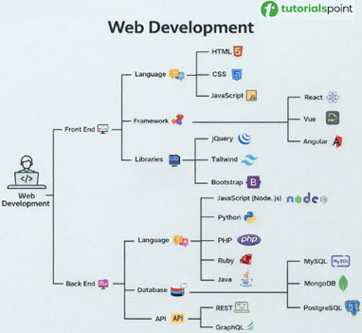
Here's how you build an AI application:
- JavaScript frontend: the conversation interface
- Node.js backend: the coordinator/gatekeeper
- AI API: the "brain"
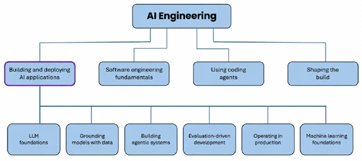
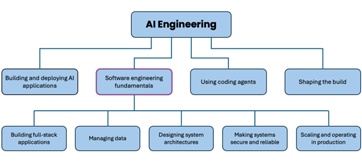
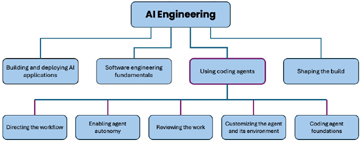
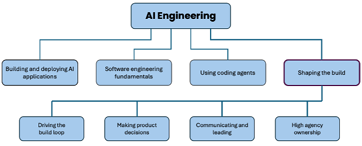
These four charts were posted to LinkedIn by Andrew Ng
AI applications are transforming any business where employees work from a computer/tablet/phone/etc. No longer does an organization need to worry
about installing complicated applications on devices and getting them to work together. Everything is handled on the backend. This enables AI to perform the bulk
of the work on behalf of the operator/employee. For example, an accounting firm now provides a simple interface to the worker, who then feeds
the AI model operating in the background the appropriate source documents. The worker then receives the results—a tax return, a balance sheet, a quarterly report,
whatever. To continue with this example, tax preparation by a firm like H&R Block now employs accountants and CPAs merely to ensure that the AI model is operating properly.
The employees working on the front lines become vastly more productive, and there are fewer of them required. The customer gets a lower price for the service. To remain
competitive, every business will need to move to this model of work.
The following topics are useful for full-stack developers, AI Forward-Deployed Engineers (FDEs), and AI engineers. FDEs take an off-the-shelf LLM and integrate it into a
custom agentic workflow that fits particular business needs. The information and examples here are currently OpenAI (ChatGPT) heavy, but I plan to add more information
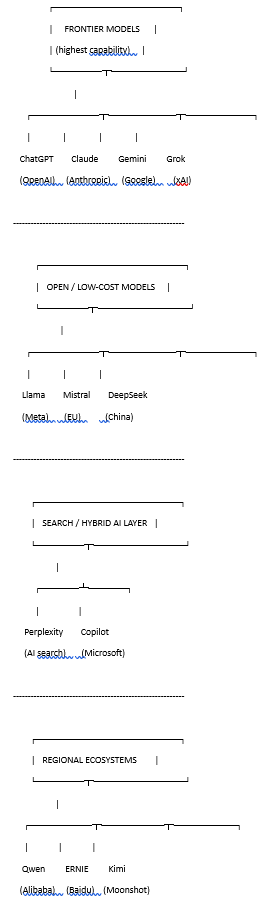
about other off-the-shelf AI products as they emerge. If you design things right, you will be able to "plug in" a new AI model (and API) into your deployment if a better one emerges for your needs. Right now we don't know
which models will win the AI race. The framework described here gives you the flexibility to swap out an old model for a new model. We're still in very early days.
 Sonny's Utopia